Wednesday, 21 October 2015

The 180 Rule

20/10/15


The 180-degree rule is a guideline in film making. An imaginary line called the axis connects the characters, and by keeping the camera on one side of this axis for every shot in the scene, the first character is always frame right of the second character, who is then always frame left of the first. The 180-degree rule enables the audience to visually connect with unseen movement happening around and behind the immediate subject and is important in the narration of battle scenes. It helps so the audience can connect to the two characters in question visually without every other thing going behind the characters distracting the audience. The camera must always be facing at the center between the characters.

The 180 rule also helps the audience with facial recognition and detail of the characters in the scene, because it can show their emotions, whereas in a long shot we won't visually see what the characters are feeling. We may here and listen, but they must seen. It helps with the continuity of the scene in the movie, so that it helps the audience understand the relationship between the characters whether they are just friends talking, or enemies negotiating peace.

My inforgraphic poster

20/10/15

My infographic poster was all made on Photoshop including the text.


I actually had a bit of fun doing this poster to be honest. I could not find a better icon symbolising an early pass, but when I thought of 'early pass' the first thing that came to my head was 'ticket.' 

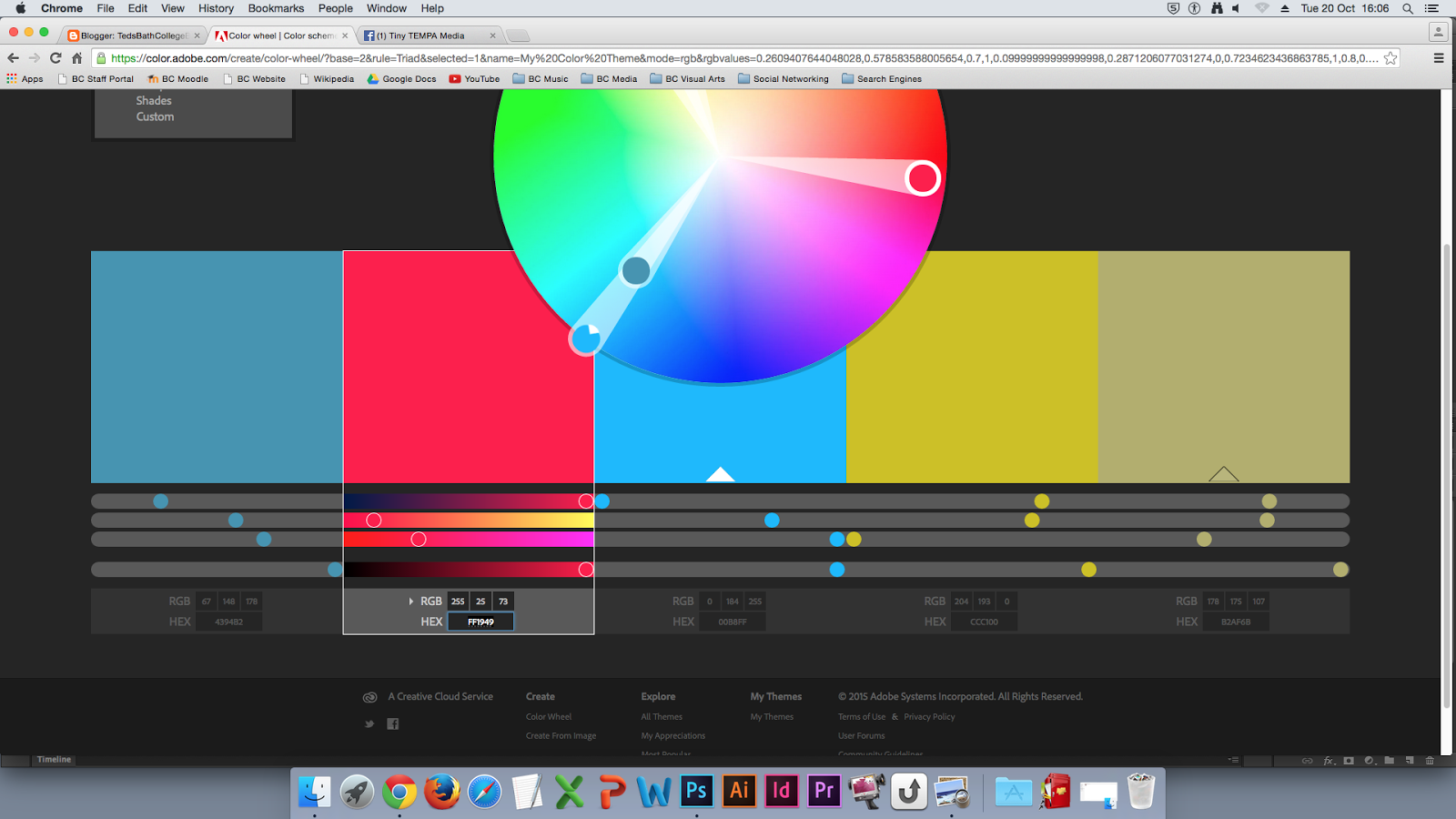
Perhaps maybe I should've reordered the percentages in order by smallest to largest. I would probably choose another colour triad on account of the dirty gold colour, but i guess i was stuck.


Monday, 19 October 2015

Reflecting on my postcard

15/10/15

The top on I do feel appeals to my audience because it helps reflect their youth 50 years ago or so. It is appealing because postcards have always been a very history of Britain. But I would probably choose different photographs that does not revolve around the River Avon more around things like .

Sunday, 18 October 2015

Filming on location

13/10/15

Today we went out to film at Green Park.

We were successful in filming the park bench, but we had a few issues with the set.
This short film features a cup of coffee and bottled water with The Carpenters' Close to You playing in the background. Then a banana comes out of nowhere trying to knock out the bottle, only missing by it's cap, but then the bottle falls over.

The following:
  • The sun behind us was casting our shadows into the shot, because it in the morning
  • We didn't come prepared for the temperature conditions
  • We could not keep our footages timeline accurate
But despite all that, we did very good on filming our little random movie. Its just all we needed to make it better was have a pre-production.

Friday, 16 October 2015

More monday lessons

12/10/15

Today we're covering more about CVs. My personal statements needed a bit of fine tuning, but it's improved. A personal statement is a part of a CV where you give yourself to the interviewer about your personal details, except not too much details.

Thursday, 15 October 2015

Types of photograph elements

01/10/15

Rule of Thirds

https://enmanscamera.files.wordpress.com/2013/09/cat-rule-of-thirds.jpg

This is the photograph of a cat with the rule of thirds, the cat has been placed to the left of the image along with the imaginary three lines to create the interest of the photograph. This photograph of the cathedral is using the Rule of Thirds by aligning one of the vertical lines with the building on the right.

Cat © https://enmanscamera.wordpress.com/tag/picture/

Viewpoint

https://upload.wikimedia.org/wikipedia/commons/7/72/Bath,_Somerset_Panorama_-_April_2011.jpg
This is a bird's eye viewpoint of Bath, it creates interest because the person who sees the image will see the whole of the city and how big it is. Unfortunately i do not have my own example of a Viewpoint.

Bath © https://en.wikipedia.org/wiki/Wikipedia:Featured_picture_candidates/July-2014

Depth of Field

https://cdn-images-1.medium.com/max/800/1*pSGDyIhxxAllyNb3FhKPag.jpeg

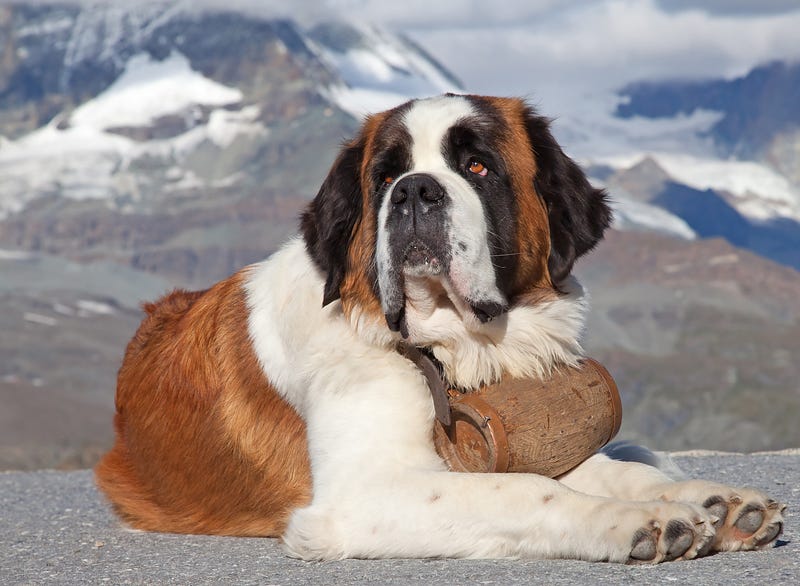
This St. Bernard can be seen clearly while the background behind him is blurry, because it is called Depth of Field. The photographer did this, because wants to make the dog the point of interest in the photo and not the mountains. The same can be said about the flower I took.

St. Bernard © http://www.petguide.com/blog/dog/top-10-large-breed-dogs/attachment/st-bernard-dog-with-keg-ready-for-rescue-operation/

Symmetry

https://upload.wikimedia.org/wikipedia/commons/1/19/Taj_Mahal,_Agra_views_from_around_(85).JPG
This photo of the Taj Mahal is interesting, because both sides of the marble building are symmetrical. But also the line in the water leads up to the building. Now what made the photo of this part of the Roman architecture symmetrical was the ram's head and wreaths.

Taj Mahal © https://en.wikipedia.org/wiki/Symmetry#/media/File:Taj_Mahal,_Agra_views_from_around_(85).JPG

Composition

https://joshedenbaum.files.wordpress.com/2014/05/img_1605.jpg
The composition in this image is balanced out by the rocks in the arch and the mountains in the distance behind them, so that it makes the audience lookout into the distance in this picture. So does the leaves and the lamp post to make the audience focus on the Royal Crescent.

Desert photo © https://blogger.googleusercontent.com/img/b/R29vZ2xl/AVvXsEiJi-h7glFTGDZtR_8S3gwvyjUUxvGV1cAMOvAToQdD9GxT7FEgYtKLa457OLCUm1R0NEc-lgvbyllG1JPIp1u9PwKQxfSGgD-XRmcnirFbfqDJxd55kuSL0Ljwp7f1YRHQJrxf6vX1uG78/s1600/natural-framing-photography.jpg

Photography techniques

15/10/15

Every type of photography requires a separate set of skills and photography equipment (although some overlap). With these Photography Technique Overview guides on photo.net, we look to impart some of these skills to you, whether the subject you're interested in is Macro PhotographyArchitectural PhotographyPortrait PhotographyNature Photography, etc. Each article offers tips on how best to approach the subject, example photographs, and even suggests photography gear to use. As with any creative pursuit, it's important to find your niche, but also important to keep exploring, keep building skills, continue to challenge yourself to learn new techniques. These articles may help you do so.